5 Sales Prospecting Mistakes That Are Killing Your Close Rate (and How to Fix Them)
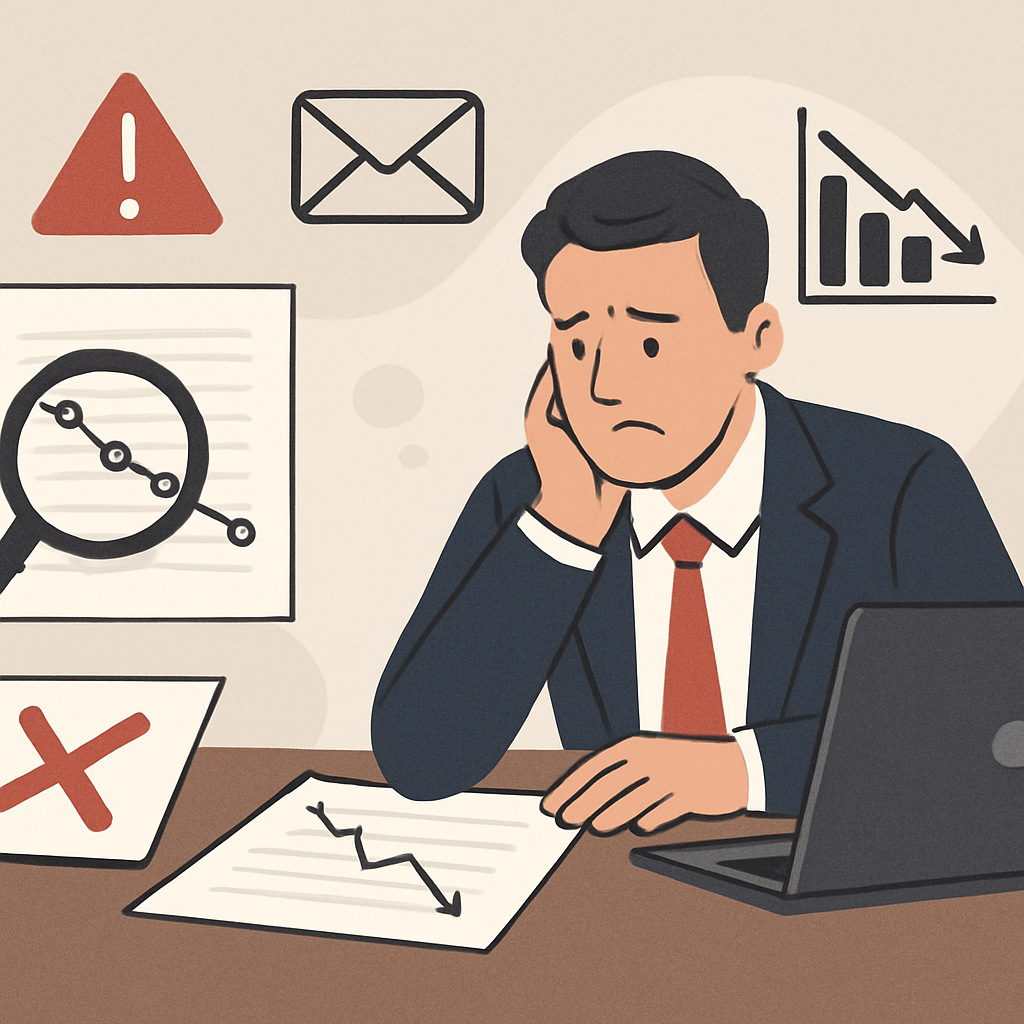
You are doing the hours. You are sending the emails. You are making the calls. Yet your close rate sits there, refusing to move. Before you blame your pitch or your pricing, look further up the funnel. The problem is almost certainly in your prospecting.
Prospecting is where deals are won or lost, long before you ever get on a call. If you are filling your pipeline with the wrong names, the wrong data, or the wrong messaging, no amount of closing skill will save you. Here are the five mistakes that are quietly sabotaging your numbers—and the specific fixes that will turn things around.
Mistake #1: Relying on Low-Quality Data
This is the foundation of everything else. If your list is full of outdated emails, wrong numbers, or companies that no longer exist, you are not prospecting. You are gambling. Low-quality data creates a cascade of problems: wasted hours, damaged sender reputation, and compliance risks that can land you in legal trouble.
When you send a pitch to a dead address or call a number that belongs to someone who never asked to hear from you, you are not just losing that prospect. You are burning trust. And in B2B markets—especially in regions like Africa where relationships matter deeply—a bad first impression travels fast.
The fix is not just "clean your data." It is building a system that keeps your data clean from day one. Maintain 95% or higher data verification accuracy to ensure prospecting success, according to Salesgenie. That means verifying emails, checking phone numbers, and confirming company details before you ever hit send.
If you are still buying static lists from outdated databases, you are fighting an uphill battle. Modern tools like LeadThur allow you to run a business search for local and niche businesses by query and location, so you can build prospect lists from live, current data instead of stale spreadsheets. For a deeper dive into building lists that actually work in the Nigerian SME space, read our guide on How to Build a High-Quality Lead List for Nigerian SMEs.
Mistake #2: Treating Every Lead Like a Qualified Prospect
There is a difference between a lead and a qualified prospect. A lead is a name. A qualified prospect is a person with a problem you can solve, a budget to pay for it, and the authority to make the decision. Too many sales reps treat these as the same thing, and their close rates pay the price.
When you pitch to everyone, you end up convincing no one. You spend your best hours on people who were never going to buy, and you miss the handful of prospects who actually could. Effective qualification helps reps focus on the right buyers, shorten sales cycles, and increase win rates. That is not a theory. That is arithmetic.
Here is a simple qualification framework you can start using today:
- Budget: Does this prospect have the money to solve the problem?
- Authority: Are you talking to the decision-maker, or just a gatekeeper?
- Need: Does your product actually address a pain they feel right now?
- Timeline: Are they looking to solve this in the next 30–90 days?
If you cannot answer "yes" to at least three of these, move on. The fastest way to raise your close rate is to stop wasting time on people who were never going to close. A practical workflow for building and qualifying a pipeline quickly is laid out in How to Build a Client Pipeline from Scratch in One Day.
Mistake #3: Ignoring Timing and Buyer Intent
You can have the perfect list and the perfect pitch, but if you reach out at the wrong time, you will still lose. Timing is not about luck. It is about reading the signals.
Using intent data helps you identify prospects actively researching solutions. If a company is hiring for a role your product supports, if they just announced a new funding round, or if they are suddenly searching for keywords related to your offering, they are telling you they have a problem. Are you listening?
Most reps do not. They send the same email to the same list on the same day of the week, regardless of what is happening in the prospect's world. That is not persistence. That is noise.
The fix is to build your outreach around trigger events. Set up alerts for job postings, news mentions, and funding announcements. When a prospect shows intent, reach out within 24 hours. Your message will land at the exact moment they are thinking about the problem you solve—and that is when close rates climb.
Mistake #4: One-Size-Fits-All Messaging
If your first email to a prospect could be sent to anyone, it will be ignored by everyone. Generic messaging is the fastest way to signal that you did not do your homework. And in a world where buyers can spot a mass email from a mile away, personalization is not a nice-to-have. It is the price of entry.
But personalization is not just inserting the prospect's first name into a template. That is the bare minimum, and buyers know it. Real personalization means referencing something specific about their business, their industry, or their recent activity. It means showing that you understand their world before you ask for their time.
Here is what a personalized outreach message needs:
- A specific observation about their company or industry (not a generic compliment).
- A relevant problem that connects your product to their situation.
- A clear, low-friction next step that respects their time.
If you are struggling to write messages that resonate with African business owners specifically, our collection of 10 Outreach Email Templates That Actually Get Responses will give you a solid starting point. But remember: templates are just scaffolding. You have to build the structure around each prospect's unique context.
Mistake #5: Rushing the Relationship
Sales reps are under pressure to move fast. Quotas loom. Managers want numbers. But rushing the relationship is a surefire way to kill a deal that was otherwise winnable.
Slowing down and building the relationship is often more effective than rushing to a pitch. When you push for a demo in the first conversation or try to close before the prospect has fully articulated their problem, you create resistance. Buyers want to feel heard, not herded.
The fix is to shift your mindset from "closing" to "discovering." Ask better questions. Listen more than you talk. Let the prospect tell you what they need before you tell them what you sell. This does not mean dragging out the process. It means moving at the prospect's pace, not yours.
One practical way to balance speed with relationship building is to use a consistent follow-up cadence. Aim for at least 3 touchpoints per prospect across 2+ channels to improve conversion velocity, as noted by Salesgenie. A call, an email, and a LinkedIn message spread over a week shows persistence without desperation. It keeps you top-of-mind without becoming a nuisance.
The Hidden Factor: Lead Assignment
Even if you fix all five mistakes above, there is one more thing that can silently kill your close rate: how leads are assigned. If your team is manually sorting through leads, or if the same rep is overloaded while another sits idle, you are leaving deals on the table.
Automated lead assignment (round-robin) can prevent bottlenecks and improve response times. When a lead comes in, the next available rep gets it automatically. No arguments, no delays, no leads falling through the cracks. Speed to lead is critical—the faster you respond, the more likely you are to close.
If you are still using spreadsheets to track who owns which lead, you are adding friction to every step of the process. Modern tools streamline this, and the difference shows up directly in your close rate.
A Qualification Scorecard to Use This Week
To move beyond generic advice, here is a concrete scorecard you can apply to every prospect before they enter your pipeline. Assign one point for each criterion met. If a prospect scores below 3, do not pitch them. Put them in a nurture sequence and revisit in 60 days.
- Trigger event in the last 30 days: Funding, hiring spree, leadership change, or a new public initiative.
- Active problem awareness: They have posted about the problem, attended a relevant event, or engaged with content on the topic.
- Budget visibility: Their company size and industry suggest they can afford your solution without a procurement battle.
- Direct access: You have a warm intro, or you have identified the exact decision-maker with a verified email.
- Timeline fit: They have a stated deadline or a project that implies urgency within the next quarter.
This scorecard is not about excluding prospects. It is about prioritizing the ones who deserve your best hours. When you apply it consistently, you will notice a shift: fewer "maybe" conversations and more "when can we start" ones.
How to Start Fixing Your Prospecting Today
You do not need to overhaul your entire sales process overnight. Pick one mistake from this list and fix it this week. Then move to the next. Here is a suggested sequence:
| Week | Focus | Action |
|---|---|---|
| 1 | Data Quality | Audit your current list. Delete anything unverified. Set up a process for ongoing verification. |
| 2 | Qualification | Implement the scorecard above. Stop pitching to prospects who score below 3. |
| 3 | Timing | Set up intent alerts. Commit to reaching out within 24 hours of a trigger event. |
| 4 | Personalization | Rewrite your top 3 templates with specific, prospect-relevant details. |
| 5 | Cadence | Build a 3-touchpoint, 2-channel follow-up sequence for every prospect. |
If you are starting from scratch on the data front, tools like LeadThur can help you find the right businesses to target. Start a free search and see what a fresh, verified list looks like compared to the stale data you may be using now. You will get a live view of businesses matching your criteria, with contact details you can verify before you reach out. For a broader comparison of modern tools versus traditional databases, check out LeadThur vs. Traditional Lead Databases.
Frequently Asked Questions
How does poor data quality directly impact close rates?
Poor data quality means you are contacting the wrong people, using outdated contact details, or reaching out to companies that no longer exist. Every bad contact is a wasted hour that could have been spent on a real prospect. It also damages your sender reputation, which means your future emails are more likely to land in spam.
What is the difference between a lead and a qualified prospect?
A lead is any contact that has shown some level of interest or fit. A qualified prospect has been vetted against criteria like budget, authority, need, and timeline. A qualified prospect is someone who can actually buy from you in the near future. A lead is just a name on a list.
How can sales reps identify buyer intent signals?
Buyer intent signals include job postings for roles your product supports, recent funding announcements, leadership changes, or a sudden increase in searches for keywords related to your offering. Social media activity and engagement with your content can also indicate interest. The key is to track these signals and act on them quickly.
What are the key elements of a personalized outreach message?
A personalized message must reference something specific about the prospect's business or situation. It should connect your product to a problem they are likely facing, and it should offer a clear, low-friction next step. Generic compliments and name-dropping do not count as personalization.
How many touchpoints are needed before a prospect converts?
Aim for at least 3 touchpoints per prospect across 2+ channels. This could be an email, a phone call, and a LinkedIn message spread over a week or two. Persistence matters, but relevance matters more. Each touchpoint should add value, not just repeat the same pitch.
How can sales teams balance speed with relationship building?
Speed matters in the initial response time, but the conversation itself should move at the prospect's pace. Respond quickly to show you are attentive, then use discovery questions to understand their needs before pitching. Rushing to a close before the prospect feels understood creates resistance.
What is the role of lead assignment in the closing process?
Lead assignment determines who follows up and how quickly. Manual assignment can create bottlenecks, especially if one rep is overloaded. Automated round-robin assignment ensures leads are distributed fairly and responded to quickly, which directly impacts your ability to close before the prospect goes cold.
Sources
- 10 Sales Prospecting Mistakes Killing Deals in 2026 – Salesgenie
- 5 Sales Process Mistakes that Kill your Close Rate – Dropbox Sign
- These 5 Sales Prospecting Mistakes Are Costing You Leads – Retreva
- Help! I Can't Close Sales: 5 Ideas to Increase Your Close Ratio – Jill Konrath
- Mistakes That Prevent Reps from Closing Sales Deals – Allego
- Why Your Close Rate Sucks: 5 Signs You're Killing Deals – LinkedIn
- 5 Prospecting Mistakes Sales Reps Make (And How To Fix Them) – Forbes