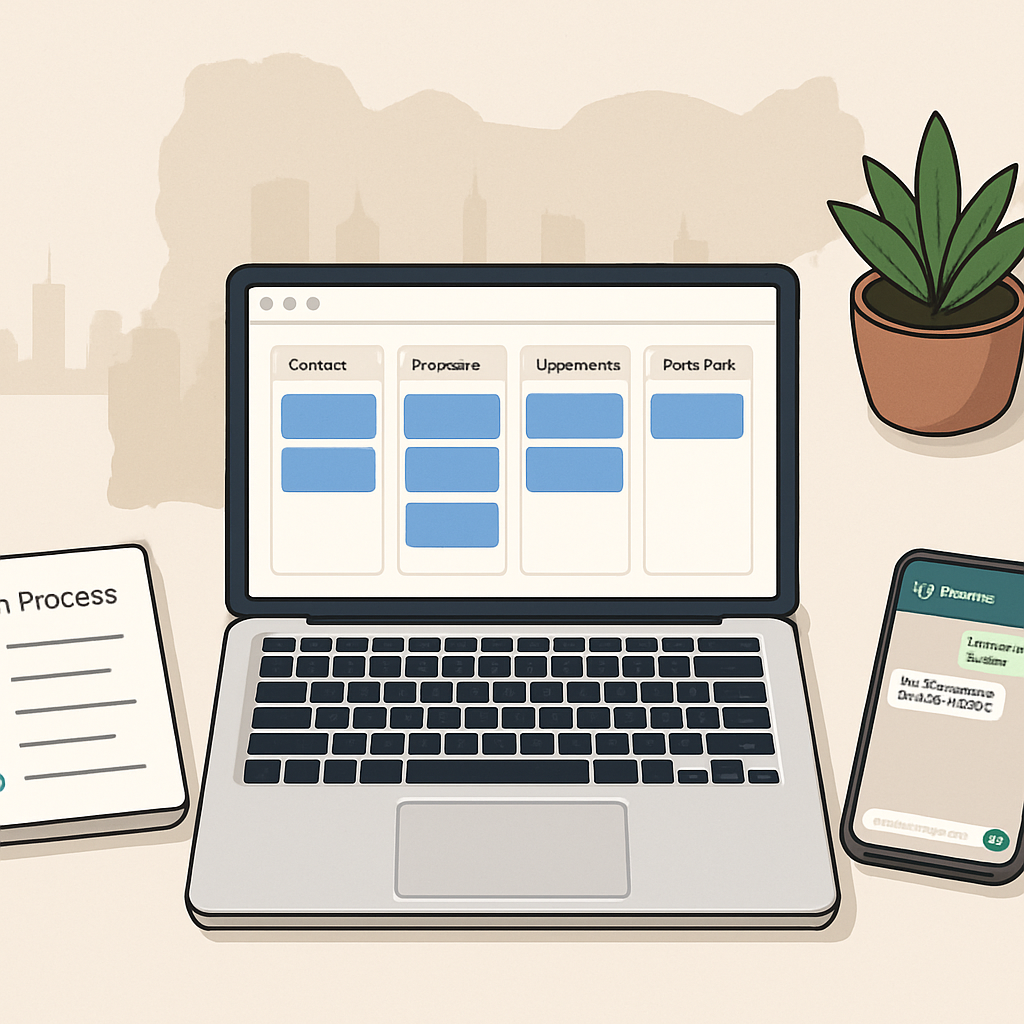
The Nigerian Freelancer's Guide to a Lead Process That Actually Wins Clients
You checked your inbox this morning. Nothing. You checked Upwork. Still nothing. The last project ended three weeks ago, and the savings are running thinner than a NEPA light bill.
This is the feast-or-famine cycle that plagues most Nigerian freelancers. When a client pays, it feels like a jackpot. When the pipeline dries up, you panic and start sending desperate DMs to anyone with a business page.
The problem isn't your talent. It's your process. Or more accurately, your lack of one.
Lead generation is not a random hustle. It's a system. And in the Nigerian market, where trust is hard-won and payment friction is real, a structured approach separates the freelancers who survive from those who thrive.
This guide walks you through building a streamlined lead process tailored to the Nigerian context. No fluff. No "just believe in yourself." Just a repeatable pipeline that trades hope for predictability.
Why Random Outreach Fails (and What to Do Instead)
Let's be honest about what most Nigerian freelancers do. They wake up, scroll through Twitter, see someone mention they need a logo, and slide into the DMs. Or they spend hours on Upwork bidding against 50 other freelancers from around the world, hoping their profile gets noticed.
Neither approach is a process. Both are gambles.
Here's the hard truth: ad-hoc outreach produces ad-hoc income. You might win a project here and there, but you'll never build momentum because you're always starting from zero.
A streamlined process involves moving from this reactive mode to a structured pipeline. That means three things:
- List building: You know exactly who you're targeting and where to find them.
- Tracking: You know where every prospect stands in your pipeline at all times.
- Follow-up: You have a system for staying top-of-mind without being annoying.
This isn't revolutionary advice. But it's advice most freelancers ignore because it feels like "real work" that doesn't directly produce income. The irony is that this work is exactly what produces income—just on a delay.
Think of it like farming. You don't plant seeds and harvest the same day. You prepare the soil, plant, water, and wait. The harvest comes because you built a system, not because you got lucky with the weather.
Step 1: Identify Your Ideal SME (Not Every Business in Lagos)
The first mistake freelancers make is trying to serve everyone. You can't. And you shouldn't.
When you target every SME in Nigeria, your outreach becomes generic. Generic outreach gets ignored. Business owners in Lagos receive dozens of "Hello sir, I can help your business grow" messages every week. Yours will be deleted in seconds.
Instead, narrow your focus. Ask yourself these questions:
- What industry do I have the most experience in?
- What type of business can I genuinely help with measurable results?
- What business size can I actually serve well as a solo freelancer?
For example, if you're a web designer, don't target "businesses in Nigeria." Target restaurants in Lekki that don't have online ordering. Or fashion boutiques in Abuja with under 10,000 Instagram followers. Or logistics companies in Port Harcourt with outdated websites.
The more specific your target, the more personalized your outreach can be. And personalization is the single biggest factor in getting replies.
This specificity also helps you build a lead list faster. Instead of searching "Nigerian businesses" and wading through millions of results, you search for "restaurants in Lekki" and get a manageable list of prospects.
If you need help building that list, check out our guide on building a high-quality lead list for Nigerian SMEs. It covers specific tactics for finding the right prospects without wasting hours on manual searching.
Step 2: Build a Prospect List That's Actually Worth Your Time
Once you know who you're targeting, you need to find them. This is where many freelancers get stuck—they don't know where to look beyond their immediate network.
Here are the most practical sources for Nigerian SMEs:
- Instagram and LinkedIn: Search relevant hashtags and keywords. Look for businesses that are active but clearly need help with their branding, content, or web presence.
- Business directories: Platforms like Finelib and Nigeria Business Directory list thousands of registered businesses by category.
- Google Maps: Search for businesses in specific areas. A restaurant with 2.5 stars and no website is a perfect prospect for a designer or developer.
- Industry associations: Many trade associations publish member directories. These are goldmines because the businesses are already organized by sector.
- Referrals: Ask your existing network for introductions. Referred customers have a 37% higher retention rate than clients acquired through other channels, so these leads are worth more in the long run.
As you build your list, capture key information for each prospect: business name, contact person, email, phone, website (if any), social media handles, and any notes about what you noticed they're missing.
This is where a spreadsheet starts to break down. You can use it for 20 prospects, but what about 200? That's when you need a proper tracking system, which we'll cover in Step 4.
Step 3: Craft Outreach That Gets Replies (Not Silence)
This is the step where most freelancers fail. Not because they can't write, but because they write about themselves instead of the prospect.
Here's a formula that works for Nigerian business owners:
- Reference something specific about their business. "I saw your post about the new menu at your Lekki branch" beats "I noticed your business" every time.
- State the problem you can solve. "Your current website doesn't show up on Google when people search for 'best suya in Lekki.'"
- Offer a specific outcome. "I can redesign your site so you rank for that search within 60 days."
- Make a low-pressure ask. "Would you be open to a 15-minute call this week to discuss it?"
Keep it short. Business owners don't read long emails. Three to five sentences max. And don't attach your portfolio unless they ask—nobody clicks attachments from strangers.
If you need ready-to-use templates, we've compiled 10 outreach email templates that actually get responses from African business owners. Adapt them to your voice and your prospect's situation.
One critical note for the Nigerian market: tone matters. Too formal and you sound like a bank. Too casual and you sound unserious. Aim for professional but warm. Address the person by name, not "Dear Sir/Madam."
Step 4: Track Every Prospect (Your Brain Is Not a CRM)
You've sent 30 outreach messages. Now what? If you're like most freelancers, you'll try to remember who you contacted, what you said, and whether they replied. That works for about a week. Then it falls apart.
You need a system. And no, a notebook doesn't count.
CRM software is essential for freelancers managing multiple prospects simultaneously. It's not just for big corporations with sales teams. A simple CRM lets you:
- See every prospect and where they stand in your pipeline
- Set reminders for follow-ups so nothing slips through the cracks
- Track which outreach messages got replies and which didn't
- Store notes about each conversation so you don't forget important details
There are many CRM options out there, from free tools to paid platforms. The key is to pick one and commit to using it consistently. A CRM is only as good as the data you put into it.
If you're comparing tools, our guide on the best Apollo.io alternatives for freelancers and small agencies can help you evaluate options based on your needs and budget.
The goal is simple: no prospect should ever fall through the cracks because you "forgot" to follow up. That's not a valid excuse when you have a system.
Step 5: Automate Your Follow-Ups (Without Being Annoying)
Here's a statistic that should change how you approach follow-ups: most sales happen after the fifth to twelfth contact. Yet most freelancers give up after one or two attempts.
The reason freelancers don't follow up isn't laziness. It's that manual follow-up is tedious and feels awkward. You don't want to be the person who keeps messaging someone who clearly isn't interested.
The solution is automation. Set up a sequence of follow-up emails that go out automatically at scheduled intervals. Here's a simple framework:
- Day 0: Initial outreach email
- Day 3: Follow-up with additional value (a tip, a resource, a relevant example)
- Day 7: Follow-up with a different angle (maybe they missed the first email, so try a new subject line)
- Day 14: Final follow-up with a clear call to action ("If now isn't a good time, I'll check back in a few months")
After that, move the prospect to a long-term nurture list. Send them useful content every few weeks. When they're ready to buy, you'll be top of mind.
This is where a tool like LeadThur can help. It allows you to manage your pipeline and automate follow-ups so you're not manually tracking every prospect. And with the free trial, you can test whether it fits your workflow before committing to a paid plan.
Automation doesn't mean being robotic. It means being consistent. The business owner who gets a thoughtful follow-up three days after your initial email is more likely to reply than the one who never hears from you again.
Step 6: Handle Payment Friction Head-On
You've done the hard part. You found a prospect, sent great outreach, followed up, and they said yes. Now comes the part that kills more Nigerian freelance deals than anything else: getting paid.
Payment friction is real. International clients worry about sending money to Nigeria. Local clients sometimes prefer cash or transfers that take days. And you can't start work without at least a deposit.
Here's how to handle it:
- Ask for a deposit upfront. 50% is standard for new clients. If they balk, explain that it covers your time and shows commitment on both sides.
- Offer multiple payment options. For local clients, bank transfer is usually fine. For international clients, consider Payoneer, Wise, or a PayPal business account. Make it easy for them to pay you.
- Put it in writing. A simple contract or invoice that states the scope, timeline, and payment terms protects both of you. It also signals that you're a professional, not a hobbyist.
- Have a late payment policy. Decide upfront what happens if a client doesn't pay on time. Will you pause work? Charge interest? Whatever you decide, communicate it clearly before you start.
Nigerian freelancers also face unique challenges like internet reliability issues that can disrupt delivery timelines. Build buffer time into your schedule and communicate potential delays early. Clients are more understanding when you're proactive about problems.
Step 7: Track Your Numbers (What Gets Measured Gets Improved)
You can't improve what you don't measure. If you're not tracking your outreach metrics, you're flying blind.
At minimum, track these numbers:
| Metric | What It Tells You |
|---|---|
| Emails sent | Your activity level |
| Reply rate | How compelling your outreach is |
| Positive responses | How well you're qualifying prospects |
| Calls booked | How effective your follow-up is |
| Proposals sent | Your conversion from conversation to offer |
| Projects won | Your closing rate |
Check these numbers weekly. If your reply rate is below 10%, your outreach needs work. If you're getting replies but no calls booked, your follow-up is weak. If you're getting calls but no projects, your proposal or pricing is the problem.
This data-driven approach is what separates freelancers who treat this like a business from those who treat it like a hobby. And it's the foundation of a sustainable freelance client pipeline that we've covered in more depth elsewhere.
Step 8: Avoid These Common Prospecting Mistakes
Even with a system in place, freelancers make avoidable mistakes that kill their close rate. Here are the most common ones:
- Following up too aggressively: There's a fine line between persistent and annoying. If a prospect has said no or hasn't responded after four or five touches, back off.
- Not qualifying prospects: Not every business that needs your services can afford them. Ask about budget early to avoid wasting time.
- Being too salesy: Nigerian business owners can smell desperation. Focus on being helpful, not pushy.
- Ignoring existing clients: Your past clients are your best source of new work. Ask for referrals and testimonials before you move on to the next prospect.
For a deeper dive into these pitfalls, read our guide on 5 sales prospecting mistakes that are killing your close rate. It's a quick read that could save you months of frustration.
Step 9: Work With Your Environment, Not Against It
Nigerian freelancers face challenges that freelancers in other countries don't. Power outages, internet instability, and time zone differences with international clients are all real obstacles. But they're not excuses.
Here's how to build your process around these realities:
- Schedule outreach during your peak productivity hours. If you're most creative in the morning, do your writing then. Save administrative tasks for the afternoon.
- Use asynchronous communication. You don't need to be online at the same time as your international clients. Email and recorded Loom videos work just as well as live calls.
- Have a backup plan for internet outages. Keep a mobile hotspot or know which cafes near you have reliable WiFi. Communicate your availability clearly to clients.
- Batch your work. Instead of checking emails every 10 minutes, set specific times for outreach, follow-ups, and client work. This reduces the impact of interruptions.
These adjustments aren't compromises. They're smart adaptations that make your process more resilient. And they're part of why a structured approach matters more in Nigeria than almost anywhere else—you can't afford to waste time on chaos when your environment already throws enough curveballs.
Step 10: Use the Right Tools (Without Going Overboard)
You don't need a dozen tools to run your lead process. In fact, too many tools create the same problem as no tools: chaos.
Here's a minimal stack that covers everything:
- CRM: One tool to track prospects, follow-ups, and deals. This is your command center.
- Email: Your regular email provider works fine for outreach. Don't overcomplicate this.
- Calendar: For scheduling calls. Google Calendar or Calendly both work.
- Payment platform: Payoneer, Wise, or Paystack for collecting payments.
That's it. Four tools. Everything else is optional.
When choosing a CRM, look for something that fits your scale. A freelancer managing 50 prospects doesn't need enterprise software. A simple, affordable tool that lets you track your pipeline and automate follow-ups is enough.
If you're exploring options, LeadThur is worth a look. It's designed for freelancers and small teams, and you can try LeadThur with a free trial before committing. This lets you test whether it fits your workflow without financial risk.
For a broader view of lead generation tools for businesses in Nigeria, that resource covers the landscape. But remember: the tool matters less than your process. A great process with a mediocre tool beats a mediocre process with a great tool every time.
Step 11: Build a Referral Engine (The Easiest Wins You're Ignoring)
Here's the thing about referrals: they're the highest-quality leads you'll ever get, but you have to ask for them.
Most freelancers never ask for referrals. They finish a project, get paid, and move on. That's a massive missed opportunity.
Referred customers have a 37% higher retention rate than clients acquired through other channels. They're also more likely to pay on time and less likely to haggle over price. Why? Because they come with social proof baked in.
Here's how to systematize the referral ask:
- Ask at the right moment. The best time is right after a successful project delivery, when your client is happiest with your work.
- Make it specific. Instead of "Do you know anyone who needs my services?" say "Do you know any other restaurant owners in Lekki who might need a website?"
- Make it easy. Offer to send a short introduction email that your client can forward to their contacts. Remove the friction.
- Return the favor. When you refer clients to other freelancers, they'll remember. Build a network of reciprocal referrals.
Referrals won't replace your outreach entirely, but they should be a significant part of your pipeline. If you're not getting at least 20-30% of your clients from referrals, you're leaving money on the table.
Frequently Asked Questions
How do I find B2B leads in Nigeria without wasting hours on manual searching?
Start with specific, targeted searches. Use Instagram hashtags related to your niche, Google Maps for location-based searches, and business directories. Then use a CRM to track your outreach so you're not re-searching the same prospects. Automation tools can also help you scale your outreach without scaling your hours.
What is the best way to organize my prospects so I don't lose track?
Use a CRM. Spreadsheets work for small lists but break down past 50 prospects. A CRM lets you track where each prospect is in your pipeline, set follow-up reminders, and store notes about each conversation. Pick one tool and commit to using it consistently.
How many follow-ups should I send before giving up on a lead?
Most sales happen after multiple touches, so don't give up after one or two attempts. A good rule of thumb is 4-5 touches over 2-3 weeks. After that, move the prospect to a long-term nurture list and check in every few months. Persistence is good; harassment is not.
How do I handle payment collection from international clients?
Use payment platforms like Payoneer, Wise, or PayPal. Ask for a 50% deposit before starting work. Put payment terms in writing before you begin. And have a clear policy for late payments so you're not chasing clients indefinitely.
What should I say in a cold email to a Nigerian business owner to get a reply?
Reference something specific about their business. Show that you've done your homework. State the problem you can solve and the outcome you can deliver. Keep it short—3-5 sentences. End with a low-pressure call to action like "Would you be open to a 15-minute call this week?"
How can I automate my lead generation process as a solo freelancer?
Use a CRM with automated follow-up sequences. Set up email templates for different stages of your pipeline. Schedule your outreach in batches rather than sporadically. And use tools that integrate with each other so you're not manually moving data between platforms.